Iran Takes Seized MSC Ships To Port, Countries Seek Updates On 40 Seafarers
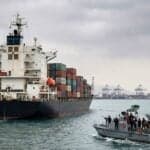


Iran has taken two container ships seized near the Strait of Hormuz toward the port of Bandar Abbas, while several countries are trying to confirm the safety of around 40 seafarers on board, sources said on Thursday.
The ships were seized on Wednesday by Iran’s Islamic Revolutionary Guard Corps (IRGC).
One of them is operated by MSC, the world’s largest container shipping company, while the second is also linked to MSC through charter arrangements, according to sources.
A relative of one of the seafarers told Reuters that about 20 armed Iranian personnel boarded the vessel.
The crew members are under Iranian control and their movement on board is restricted, but they are being treated well, the relative said.
Montenegro’s Minister of Maritime Affairs Filip Radulovic said the MSC Francesca is currently anchored about nine nautical miles from the Iranian coast.
He added that negotiations between MSC and Iran are ongoing and confirmed that the sailors are safe.
Four crew members on the MSC Francesca, including the captain, are from Montenegro. Croatia’s foreign ministry also confirmed that two Croatian nationals are on board.
Details about the crew of the Panama-flagged ship have not been fully shared, but container ships of this size usually carry around 20 seafarers. MSC has not commented on the incident.
The second vessel, the Liberia-flagged MSC Epaminondas, has a crew of 21 people made up of Ukrainians and Filipinos, according to the Greek coast guard. The ship was heading toward India at the time.
Authorities in the respective countries said they are seeking more information on the condition of their nationals and working on securing their release. Both ships are reported to be safe.
No details have been released about the cargo on either vessel. Maritime sources said both ships had their tracking transponders turned off, but data showed they were near Bandar Abbas.
On April 19, U.S. forces boarded and seized the Iran-flagged cargo ship Touska in the Indian Ocean. In response, Iran said its armed forces would retaliate against what it called an “armed piracy” by the United States.
Iran’s foreign ministry demanded the immediate release of the vessel, its crew, and their families, but no details about that crew have been shared.
The situation has added pressure to shipping through the Strait of Hormuz, which normally carries around 20% of global oil and liquefied natural gas supplies.
Oil prices have risen sharply due to disruptions in the area, with Brent crude trading around $102 a barrel compared to about $72 before the escalation began in late February.
The United States has also stepped up action against Iran-linked shipping. U.S. Central Command said 31 vessels have been ordered to turn back or return to port since April 13.
The U.S. Department of Defense also said it boarded the tanker M/T Majestic in the Indian Ocean, which was carrying Iranian oil.
Additionally, data firm Vortexa said six tankers carrying more than 10 million barrels of Iranian crude passed through the strait between April 13 and April 21.
Shipping analyst Peter Sand, chief analyst at Xeneta, said the situation shows what he called the “weaponization of trade.” He said there is still no safe and free passage through the Strait of Hormuz despite temporary ceasefire signals in the region.
He added that shipping through the area has remained unstable, with some vessels still passing but overall traffic far below normal levels.
Data shows an average of around 14 ships have been moving through daily in recent weeks, compared to normal volumes that are much higher. At one point, traffic fell sharply in March before slowly rising again.
Sand also said recent seizures show that even when the strait appears open, it is still not safe for ships, crews, or cargo.
At the same time, some changes in shipping routes have helped reduce pressure on freight rates.
Average container shipping spot rates from China to Jeddah, a key alternative route for Middle East cargo, have risen 63% since the escalation began but have fallen 11% in April to around $4,969 per FEU.
He said congestion is still affecting alternative ports like Jeddah, but these land bridge routes are helping move essential cargo such as food supplies into the region. However, he also noted that these systems cannot handle full trade volumes, so disruptions continue.
References: Reuters, Xeneta
Want to read more?
Check out the full article on the original site